
Cleaning Your MacBook: Why Procrastination Is Dangerous
Cleaning your MacBook. It's been on your to-do list for months. You know you have to, but you put it off. Afraid of breaking something. No idea which products are safe. And honestly: it feels like a hassle. Just like with your AirPods , which could also use a good cleaning.
Yet, this very procrastination is the biggest threat to your MacBook. Because what no one tells you: that layer of dust on your keyboard and in the vents acts like an insulating blanket. Your processor runs hotter, your battery degrades faster, and that expensive repair is getting closer. Meanwhile, five minutes of maintenance with the right accessories could add years to your MacBook's lifespan. It's not rocket science; it's just doing what Apple technicians have been preaching for years but which most users ignore.
Useful links:
Why that one minute makes a difference
The difference between a MacBook that lasts three years and one that lasts seven? Regular cleaning. Simple, but true. Those crumbs between your keys, the dust in the vents, the fingerprints on the screen—they seem harmless. Until your fan starts working overtime. Or a key gets stuck. Or your screen shows dead pixels.
Any MacBook repairer can confirm: most problems arise from neglect. Not from faulty parts, but from dirt buildup. A clean MacBook runs cooler, performs better, and lasts years longer. It'll take you five minutes a week. That's all.
The right stuff: not rocket science
Forget expensive cleaning kits. For a thorough MacBook cleaning, you only need four things:
- Microfiber cloth : two pieces, one damp, one dry
- Isopropyl alcohol 70% : evaporates quickly, leaves no streaks
- Compressed air in a can : for keyboard and ventilation openings
- Cotton swabs : for those tricky corners
No window cleaner, no paper towels, no all-purpose cleaner. Those will damage the coating on your screen and casing. Isopropyl alcohol is safe for all MacBook parts and kills 99% of bacteria. Perfect for a device you touch every day.
The screen: the right technique
Step 1: Power off and unplug
Turn your MacBook completely off. Don't put it to sleep, but actually turn it off. Unplug all cables. This prevents short circuits and makes dirt more visible on the black screen.
Step 2: Remove dust
Wipe with a dry microfiber cloth in horizontal motions from left to right. Start at the top and work your way down. Don't press too hard—the screen is more sensitive than you think.
Step 3: Tackle stains
Spray a small amount of isopropyl alcohol on your cloth (never directly on the screen). Use circular motions over stubborn stains. Work in sections of about 10x10 cm.
Step 4: Drying
Use the dry cloth to remove any remaining moisture. Check for streaks from different angles.
The keyboard: the dust collector
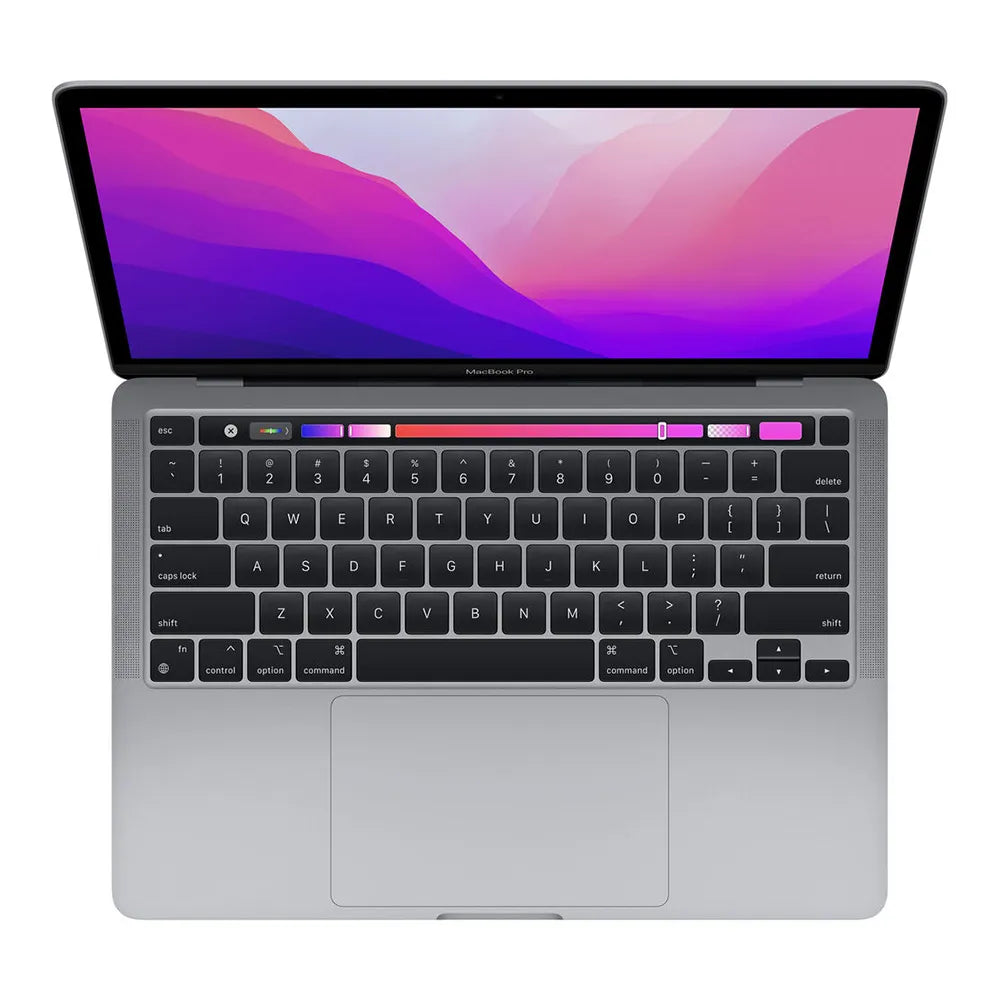
Your keyboard collects more dirt than any other part. Breadcrumbs, dander, hair—it all gets stuck between the keys. Here's how to get it clean again:
The tilt method
Hold your MacBook at a 75-degree angle. Use compressed air in short bursts from left to right, then top to bottom. The dirt will fall out instead of being trapped deeper.
Test by test
Dip a cotton swab in isopropyl alcohol (squeezed, not dripping). Clean around each key. Pay special attention to the space bar and enter keys—they get dirty the most.
The butterfly mechanism
Do you have a MacBook from 2015-2019? Then you have the infamous butterfly keyboard. It's extra sensitive to dust. Use compressed air more often, at least once every two weeks. Replacing a stuck key can easily cost €400.
The case: more than cosmetic
Fingerprints on the case don't just look unsightly. The acids in your skin oils corrode the aluminum. Over time, permanent stains develop.
The right approach:
- Lightly dampen a microfiber cloth with isopropyl alcohol
- Wipe in the direction of the grain of the aluminum
- Pay extra attention to the bottom - that's where most dust collects
- Don't forget the rubber feet, they keep your MacBook stable
Ventilation openings: the forgotten zone
The vents are hidden behind the hinge. Out of sight, out of mind. But this is where overheating begins. A clogged vent forces your processor to slow down. Your MacBook slows down without you knowing why.
Cleaning strategy:
- Use compressed air at a 45 degree angle
- Blow from the inside out, not the other way around
- Repeat this monthly with intensive use
- Check if your fan makes less noise after cleaning
The Gates: Small Openings, Big Problems
USB-C ports are magnets for dust and lint. A dirty port will charge more slowly or not at all. Use a dry toothbrush (soft) to gently remove lint. Then blow away any remaining debris with compressed air.
Caution: Never insert metal objects into the ports. This can damage the contacts.
Common Mistakes (and How to Avoid Them)
Mistake 1: Using too much moisture
Moisture is the enemy of electronics. Never spray directly on your MacBook. Dampen a cloth, squeeze out the excess moisture, and then work.
Mistake 2: Aggressive cleaning agents
No bleach, no ammonia, no acetone. These substances will permanently damage your screen's anti-reflective coating.
Error 3: Pressing too hard
Your screen isn't a kitchen table. Light pressure is enough. Rubbing hard will cause micro-cracks in the coating.
Error 4: Forgetting to turn off
Leaving a MacBook turned on while cleaning can lead to accidental input, short circuits, or pixel damage.
Preventive maintenance: better prevention
A cleaning routine prevents major cleaning sessions:
- Daily : Wipe the screen and keyboard with a dry microfiber cloth
- Weekly : Use compressed air for the keyboard
- Monthly : thorough cleaning of all parts
- Quarter : Check and clean all ports and vents
When to seek professional help
Some problems can't be solved by cleaning:
- Keys that remain stuck even after cleaning
- Fan that continues to run hard despite clean openings
- Stains on the screen (not on it)
- Gates that do not work after cleaning
Then it's time for professional maintenance. Better a minor repair now than a complete replacement later.
The result: noticeable difference
A clean MacBook isn't a luxury; it's a necessity. You'll notice the difference immediately: faster response, less fan noise, longer battery life. But more importantly, you'll prevent expensive repairs. Those five minutes of maintenance a week? They'll save you hundreds of euros and extend its lifespan by years. Start today. Your MacBook deserves it.
Conclusion: simple maintenance, big difference
Cleaning your MacBook turns out to be a simple task. With a microfiber cloth, some isopropyl alcohol, and compressed air, you can keep your device in top condition. Those few minutes a week make the difference between a MacBook that starts giving you problems after three years and one that lasts seven years without a hitch .
Just like you clean your AirPods regularly, your MacBook deserves this simple maintenance too. The result: better performance, fewer malfunctions, and significant savings on repair costs. No more excuses—grab that microfiber cloth and get started.